About
Contents
About the Convenor
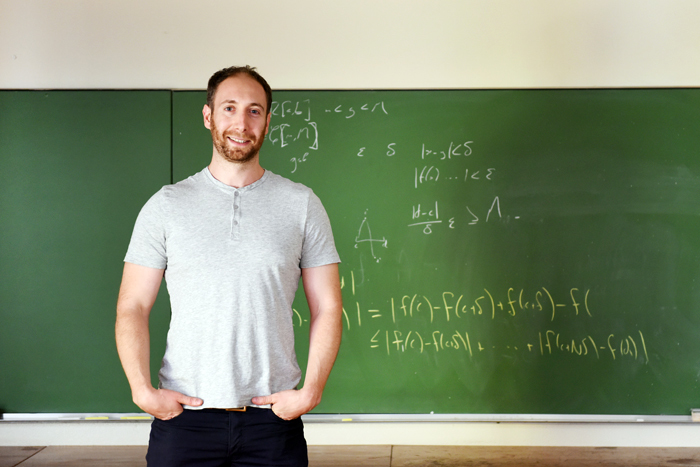
I'm Jonathan Shock, an Associate Professor in the Department of Mathematics and Applied Mathematics at the University of Cape Town. My research moves between theoretical physics, complex systems, and the application of machine learning to problems across the sciences and humanities. I wear a number of hats at UCT:
- Associate Professor, Department of Mathematics and Applied Mathematics
- Lead of Shocklab, a research group of students and postdocs working across a wide range of topics
- Interim Director of the UCT AI Initiative
- Co-PI of the African Hub on AI Safety, Peace and Security
- PI of the African Compute Initiative
Get in touch
For corrections, questions, or to suggest improvements: jonathan.shock@uct.ac.za. More about me at shocklab.net.
About This Course
MAM5020F: Generative AI for Research is a 12-week, NQF Level 9 postgraduate course at the University of Cape Town. It assumes no prior background in machine learning, computer science, or programming, only a willingness to think carefully about how generative AI is reshaping research practice.
The course covers how these tools work, where they help, where they mislead, and how to use them with intellectual honesty. Topics span the foundations of generative AI, environmental and ethical implications, AI-assisted literature review, writing and ideation, data and code, multimodal analysis, and the future of AI in African research contexts.
Each week follows a three-phase rhythm: Pre-Class (readings and videos), In-Class (discussion and activities), and Post-Class (deeper reading and assignments). Most readings are freely accessible; paywalled ones are marked. Assessment combines weekly practical exercises (40%), a research enhancement project (40%), and a personal ethical framework (20%).
Who This Is For
The materials are designed first for UCT postgraduate students enrolled in MAM5020F, but they are openly licensed and freely available for self-learners anywhere in the world. If you are a researcher, educator, or graduate student trying to make sense of generative AI in an academic context, you are welcome to read, adapt, and reuse anything here.
The course has a strong African focus (ubuntu ethics, the RIA Just AI Framework, South African energy and infrastructure realities, and the question of sovereign AI capacity on the continent), set alongside the broader global context.
Licence
CC BY 4.0 These materials are released under a Creative Commons Attribution 4.0 International licence. You are free to share and adapt them for any purpose, including commercially, provided you give appropriate credit, link to the licence, and indicate if changes were made.
This release is authorised under clauses 8.2 and 9.2.1 of the UCT Intellectual Property Policy (2011), which assigns course-material copyright to the academic author and explicitly permits Creative Commons distribution. UCT retains a perpetual royalty-free non-exclusive internal-use licence (clause 8.2).
The full licence text is available in the LICENSE file in the course repository.
How to Cite
If you use, adapt, or reference these materials in your own teaching or writing, please cite them as:
Contributing & Reporting Errors
The source for everything you see here lives on GitHub at shocklab/Generative-AI-in-research-course. If you spot an error (a broken link, a misattributed citation, a statistic that no longer matches its source, a confusing explanation), the most useful thing you can do is open an issue or a pull request.
You can also email jonathan.shock@uct.ac.za directly. Corrections from outside readers have already meaningfully improved several pages.
A Note on AI Assistance
The design, presentation, and much of the content of these pages were created and refined with substantial assistance from AI tools, primarily Claude (Anthropic). Every page has been reviewed and audited by a human, and citations and statistics have been verified against primary sources where possible, but errors will still occasionally slip through. This course teaches researchers how to use AI critically, and it was itself built with AI. For the longer version, see the AI Content Disclaimer.
Drafted with Claude (Anthropic) and reviewed by Jonathan Shock before publication. AI-generated errors are possible — if you spot one, please email jonathan.shock@uct.ac.za. Full detail: AI Content Disclaimer.
© 2026 Jonathan Shock · MAM5020F: Generative AI for Research · CC BY 4.0